Honorary Houstonian & Goodwill Ambassador
Presented by Mayor Louie Welch.
THE ARTIST & THE AUTHOR
Painter, author, musician and cultural advocate. A life devoted to the dialogue between the arts.
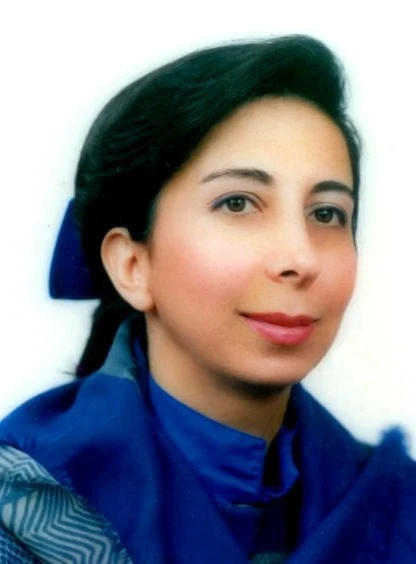
BEIRUT, LEBANON · AN INTERNATIONAL PRACTICE
Dédé Hourani is a Lebanese artist-painter and author whose work brings the visual arts, classical music and writing into conversation. Nature, the cosmos and human memory run through her paintings and texts, joining a sensitivity to colour with a love of rhythm, space and light.
Her life in the arts extends beyond the studio. As an educator, a supporter of young artists and the founder of the Selecteum of Arts and Sciences, she has cultivated spaces in which artistic practice, cultural exchange and the sharing of knowledge can meet.
Her international exhibition history connects Beirut with Houston, Washington, London and Paris. Yet her work continues to return to the landscapes, family memories and cultural life that shaped her beginnings.
Discover her painting practiceDédé Hourani’s artistic formation spans music, interior architecture and the visual arts. At the Académie Libanaise des Beaux-Arts (ALBA), she received diplomas from the Music School and the Interior Architecture School, then earned a Master’s degree in Visual and Fine Arts, graduating first in her class with highest honours and the congratulations of the jury.
The jury was chaired by Alexis Boutros, ALBA’s founder and president, a cellist and conductor. The quality of her project—its concept, command of materials and pictorial execution—led him to arrange for her work to be exhibited at Dar El Fann wal Adab. Her early studies also included piano with Igor Shchetinnikov, a graduate of Moscow’s Tchaikovsky State Conservatory, and sculpture with ALBA professor Zaven.
This breadth of training remains present in her paintings: colour moves with a musical rhythm, while the composition rests on a considered architectural framework.
Hourani’s paintings do not seek a literal description of the visible world. Human figures, trees, landscapes and cosmic spaces become reconstructions of reality, shaped by emotion and memory. Her practice moves through lyrical abstraction and a personal form of figuration, where what is suggested can be as important as what is shown.
Calligraphic play, contrasts of colour and an attentive use of materials give her compositions their character. Forms, silhouettes and signs establish a space in which reason and instinct meet. The paintings hold a tension between the fleeting sensation of a moment and the enduring presence of the subject.
Classical compositions and poetry offer another starting point. The painting collection includes works responding to Bach, Schubert, Wagner, Debussy and other composers. Rather than illustrate a score, she gives its rhythms, atmosphere and emotional movement a pictorial life of their own.
Explore the paintingsMusic is both a source of inspiration and an active part of Hourani’s cultural work. She founded and presides over the Selecteum of Arts and Sciences, a place for artistic and intellectual exchange. She also established the Musique del Tempo Quartet, as well as an orchestra with a choir.
Through musical sessions, cultural gatherings and soirées in Lebanon and abroad, she has brought artists, performers and audiences into conversation. Her writing about musicians and cultural figures extends this dialogue beyond the concert hall, reflecting an interest in the people and ideas that sustain artistic life.
Interviews & cultural conversationsHourani writes in French and English, bringing the same sensitivity to words that she brings to colour. Her books include The Philosophy of Art and Aesthetics, If the Trees Could Talk and Cantata for a Happy Childhood, each published in French and English editions.
The Philosophy of Art and Aesthetics considers the relationship between art, its meaning and its capacity to refine human experience. If the Trees Could Talk turns toward nature and its vulnerability, making a plea for the protection of trees and the landscapes inherited by future generations. Cantata for a Happy Childhood revisits family life, artistic beginnings and the love of classical music.
Her poetry returns to trees, light, place and musical experience. In this writing, memory is not simply nostalgia: the past and present continually act upon one another. Her father, Adib Hourani, was an enduring source of inspiration, and his book Sublime Thoughts bears her painting Nature’s Talk on its cover.
Discover the books & poetryAlongside her own practice, Hourani has served as a professor at ALBA’s School of Visual and Fine Arts, reviewed practical projects and supported Bachelor’s and Master’s diploma work. Her academic service has included participation in artistic and cultural exchanges with French schools of art and the Academy of Fine Arts of Saint Petersburg.
From 1986 to 2016, she supported financially struggling students through scholarships and annual prizes. These included awards for leading students in the Bachelor’s and Master’s cycles, support for study at French universities, and assistance with doctoral enrolment and funding in Lebanon and abroad.
From 2016 onward, her support continued through tuition aid and awards for deserving students in architecture and interior architecture. Her wider commitment to cultural life has also included assistance to underprivileged families.
Hourani’s exhibition history begins in Beirut’s salons, museums and cultural spaces, including the Ministry of Fine Arts’ Spring Salon, Grenier des Artistes, Dar El Fan and the Sursock Museum’s Autumn Salon. Later exhibitions brought her paintings to Dubose Gallery and Houston Center, Washington Art Center, Lawrence Gallery in London and the Grand Palais in Paris.
Her own Dédé Hourani Gallery in Houston became a further setting for artistic encounters. In Lebanon, her work also appeared in places associated with cultural memory, including the American University of Beirut, the Goethe Institute and the Castle of Beiteddine.
Paintings have been selected for educational, medical and professional spaces across the United States. Together, these exhibitions and institutional projects trace a practice that crosses borders while remaining connected to the landscapes and cultural life of Lebanon.
Follow the exhibition journeyHourani’s professional affiliations include the Lebanese Association of Visual Artists and the ALBA Alumni Association, whose committee appointed her an honorary member. Her biography records honorary membership of the Houston Contemporary Museum and Houston Opera House, and recognition as a Goodwill Ambassador of Houston.
A member of the Pen Club since 1997, she has also served on the Saliba Douaihy Committee in New York as representative for the external affairs of his art in Europe, and on the Zaki Nassif Program Committee at the American University of Beirut. These roles connect her own work with a sustained interest in artistic heritage, education and exchange.
RECOGNITION & CULTURAL SERVICE
Presented by Mayor Louie Welch.
Presented by Kenneth Jenesson.
Presented by Mayor Jim McConn and Councilman Louis Macey.
Her biographical record includes medals presented by Presidents Ronald Reagan, George H. W. Bush and George W. Bush.
Presented by Arthur Dula.
Presented by Senator Orrin Hatch.
Presented by Dean Baxter, in connection with the company’s sponsorship of her work.
Recorded in her biography as an honour awarded by President George W. Bush.
Selected distinctions from Dédé Hourani’s biographical record. Historical titles and award descriptions are retained in that context.
A CRITICAL PERSPECTIVE
“Dédé Hourani is a painter of sensations and unexpected encounters.”
INTERNATIONALLY RENOWNED VISUAL ARTIST
As an internationally renowned visual artist, Dédé Hourani’s approach draws her close to those who champion a new figuration. The images she proposes are not realistic; they are reconstructions of a certain reality in which emotion and distance, the incommunicable and the suggested, are intertwined.
A WORLD OF REPRESENTATION BETWEEN THE IMAGINARY AND THE PERCEPTIVE
Human beings and elements of nature are present in her works. These beings bear witness to the drama of the human condition, beings that inhabit memory. For her, the antagonism between realism and expressionism holds no meaning. In each work, she endeavors to recount the journey of her sensations and feelings through themes charged with strong symbolic potential in lyrical abstraction.
She possesses a keen sense of calligraphic play and a mastery of the pleasing effects of color contrasts.
Her work reflects a taste for space and the cosmos, as well as interpretations of musical compositions by great composers and poems by renowned poets. Yet her creations develop according to a strict order within a well-defined architectural framework.
Dédé Hourani is a painter of sensations and unexpected encounters. In her works, she boldly endeavors to make judicious use of diverse materials, extracting them from their raw materiality (except in sculpture), and drawing from them, through a mastered craft, a construction of all the figurative elements that enter into aesthetic circulation.
What this painter-artist offers through her production is her capacity for calligraphic play and her love of material. Her approach is rooted in the logic of forces, deep truths, and events that mark destiny. Each work is a contained harmony — not closed, always open in its itineraries, yet defined by the waves of its pulsation. From the formal emerge all the elements of a virtual space, or those of inner visions illustrating states of mind. A great emotionality is expressed in the observation the image gives us, which no longer has any references but itself, at the threshold of legibility, passing — through forms, silhouettes, elements, signs, color harmonies and their light, and graphic plays that invade space — from the already seen to what has not yet been contemplated, from what is yet to be to what has already passed.
Dédé’s painting captures the simultaneously ephemeral and permanent character of its subjects. The translation of compositions at the level of structure suggests an optical order that depends not on a model or a rule, but rather on a relationship established between the imaginary and the perceptive. At times, the texture of color and light acquires an atmospheric consistency. Spaces are always shaped according to a subtle play of carefully considered correspondences.
Dédé Hourani’s output reflects a search for indescribable expression and a passion for color. She does not exhaust herself in common imagery, but continues to explore an art toward which she has turned without illusion — an art in which a balance between reason and instinct can be discerned, leaving no room for misunderstanding.
Refusing a naturalistic description, she focuses on the essence of the elements that compose the work, on the rhythms and harmonies of color. She breaks the barriers of a traditional mode of representation in order to rediscover the unity of a personal theme and expression, through which she achieves an excellent mastery of craft, creativity, and international renown.
AN ART OF WRITING AT THE CROSSROADS OF CONTEMPORARY MODES OF CONCEPTION
The author of several works in French and English — among them “The Philosophy of Art and Aesthetics,” “If Trees Could Speak,” and “A Cantata for a Happy Childhood” — her structure and editorial dynamics reveal a transformation toward a poetic, nostalgic, and retrospective language, simple and progressive, inscribing the text within a living memory. The images are ordered according to a growing complexity, oscillating between past and present, to approach a singular moment: that of writing.
As the text unfolds, one discovers, through the succession of images, what a living memory truly is. This living memory is not limited to nostalgia for the past, nor to longing for cherished experiences; nor is it a simple restitution of memorable situations or events. Rather, it is engaged in a dynamic whole in perpetual transformation, where past and present combine to act mutually upon one another, evoking, in superposition, all human emotions: joy, anguish, disappointment, happiness, passion… Thus, Dédé Hourani’s past, bound to the active present, transforms ceaselessly; and as they develop, they illustrate the moments of her lived experience as they mark her memory.
An innovative and modern thought circulates through her works, lending them their full dimension. The combined doubling of events and the spatiotemporal environment within the work appears as an attempt to grasp or re-grasp the essence of places and events through all their complexities, their transformations, their contradictions.
If the past, the future, what lies ahead and behind, tend in her texts to settle upon the smooth surface of the present — through a subtle and calculated play of perspectives and approaches — it is in order to obey a space without shadow and without depth, where everything unfolds. In each work, the author endeavors to let the text speak for itself, so as to make us perceive the emotions that inhabit it, according to a light that is that of consciousness, but also another, purer, closer light, emanating from the soul.
Her language is symbolic. What she expresses, she says in an indelible manner. She writes the words that need to be written, the words one expects. It is always a dreamlike exploration — an exploration of her feelings and sensations to their innermost reaches, an exploration of an inner world in which no caesura exists. Rather than being a projection of the “self” into the world, the works reveal an internalized world where images are akin to painting. She describes vivid, colorful scenes. She pushes back perspectives, separates planes, creates an immense circulation — and something like a pulse of eternity.
The vertiginous unfolding of images is the hallmark of an innovative and modern mind — the animating thought that circulates through the work and gives it its full dimension, revealing the stirrings of the inner state of being.
by
Nicole Malhamé Harfouche
Former Director of the School of Visual and Fine Arts
at Académie Libanaise des Beaux-arts